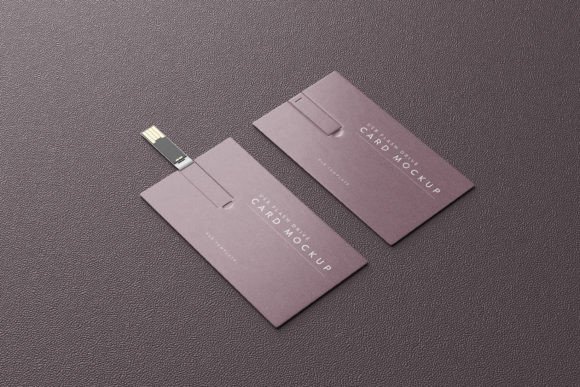
USB Flash Drive Business Card Mockup: A Comprehensive Evaluation
In the evolving landscape of professional networking, the standard paper business card is increasingly being supplemented or replaced by more dynamic solutions. Among these innovations, the USB Flash Drive Business Card Mockup has emerged as a significant tool for designers and marketers. This hybrid device combines the traditional utility of contact information with the functional capacity of digital storage. While often referred to simply as a USB business card, understanding its specific design representation through a mockup is crucial for anyone considering this format for their brand.
Understanding the USB Flash Drive Business Card Concept
A USB flash drive business card is not merely a piece of plastic; it is a compact storage device integrated directly into a card-sized form factor. Typically, these devices feature a retractable mechanism where the USB connector slides out from the body of the card when needed and retracts for protection. The most common configurations include capacities of 16GB, 32GB, and 64GB, allowing users to store extensive portfolios, high-resolution videos, or large databases that would be impossible to fit on a QR code or a simple text card.
The term USB Flash Drive Business Card Mockup specifically refers to the visual representation used during the design phase. Before manufacturing begins, businesses utilize these digital templates to visualize how their branding will look on the physical product. These mockups allow stakeholders to see exactly how the logo, color scheme, and typography interact with the unique shape of the device. This step is vital because the surface area for printing is limited, and the placement of the retractable slot must be accounted for in the design layout.
Why Consider This Format?
Individuals and companies interested in this format are usually driven by a need to stand out in a saturated market. The primary motivation is differentiation. When handing over a standard paper card, the recipient often places it in a wallet or discards it immediately. In contrast, a functional device offers immediate utility. It transforms a passive exchange of information into an active engagement. The recipient receives a tool they can use, which increases the likelihood that the item will be kept and utilized repeatedly.
Furthermore, the ability to carry substantial data sets makes this ideal for creative professionals. Photographers, videographers, architects, and graphic designers often have large files to share. Instead of relying on slow internet connections or cloud links that may expire, a 32GB or 64GB card provides instant access to a curated portfolio. This functionality serves as a powerful demonstration of technical competence and resourcefulness.
Benefits and Practical Advantages
The advantages of adopting this technology are multifaceted, extending beyond mere novelty. One of the most significant benefits is the permanence of the connection. Paper cards degrade over time, and ink fades. A USB device, however, remains intact for years, provided it is handled correctly. The embedded nature of the drive also protects the connector from dust and damage, ensuring longevity.
From a marketing perspective, the impact is measurable. Because the item is useful, it stays in the recipient's possession longer than a disposable flyer. Every time the user plugs the drive into a computer, the brand name visible on the casing is reinforced. This repeated exposure creates a stronger memory association than a single glance at a printed card. Additionally, the customization options are vast. The body of the card can be molded into various shapes, printed with full-color graphics, or finished with matte or glossy textures, allowing for a high degree of brand alignment.
Tradeoffs and Critical Considerations
While the concept is appealing, it is essential to approach the decision with a balanced view of the tradeoffs involved. The most obvious drawback is cost. Manufacturing a USB flash drive business card is significantly more expensive than printing paper cards. The unit price includes the cost of the flash memory chip, the circuit board, the housing material, and the complex assembly required for the retractable mechanism. For businesses operating on tight budgets or distributing to thousands of people, this expense may be prohibitive.
Another consideration is compatibility and obsolescence. Technology evolves rapidly. While USB-A ports are still common, many modern laptops and smartphones now rely exclusively on USB-C or wireless transfer methods. If a business invests heavily in USB-A cards, they may find that a significant portion of their network cannot easily access the data without an adapter. Furthermore, security concerns exist. Unlike a paper card, a lost USB drive contains accessible data. If the drive is not password-protected, sensitive company information could be compromised if the card falls into the wrong hands.
Data integrity is also a factor. Flash memory has a finite lifespan and can fail due to power surges, physical shock, or age. Relying solely on a single physical drive for critical data distribution carries a risk that does not exist with digital backups. Therefore, the content stored should ideally be a showcase rather than the only copy of important documents.
Situations Where It Is a Strong Fit
This solution is particularly well-suited for specific scenarios where the value proposition outweighs the cost. High-end consulting firms, luxury brands, and specialized agencies often use these cards to signal exclusivity and attention to detail. In these contexts, the higher price point reinforces the perception of premium service quality.
It is also an excellent choice for industries requiring heavy media consumption. Real estate agents showcasing virtual tours, interior designers presenting 3D renderings, or event planners sharing highlight reels benefit immensely from the storage capacity. In these cases, the card acts as a portable hard drive, solving a genuine logistical problem for the client.
When Alternatives May Be Worth Considering
Conversely, there are situations where traditional methods or other digital alternatives might be more appropriate. For mass-market consumer goods or B2B sales targeting a broad audience, the cost per unit of a USB card may yield a poor return on investment. In such cases, a high-quality printed card paired with a QR code leading to a robust website or cloud folder is often more efficient.
QR codes offer a similar "digital bridge" but with zero manufacturing costs for the hardware. They are universally compatible with smartphones and do not require the recipient to own a computer with a USB port. If the goal is simply to direct traffic to a website or social media profile, a QR code achieves the objective without the bulk and expense of a physical drive.
Decision-Making Insights for Selection
Selecting the right format requires a clear assessment of goals. Businesses should ask themselves what they want the recipient to do after receiving the card. If the goal is to facilitate immediate file transfer and create a tangible keepsake, the USB flash drive business card is a strong candidate. However, if the goal is broad awareness or driving web traffic, simpler, cheaper solutions may suffice.
When evaluating a USB Flash Drive Business Card Mockup, it is important to look beyond the aesthetics. Designers must ensure the mockup accurately reflects the final product's dimensions and functionality. The retractable mechanism must be clearly visible in the design to avoid confusion during production. Testing the mockup with potential clients can provide valuable feedback on whether the perceived value matches the actual utility.
Ultimately, the decision rests on the balance between budget, target audience expectations, and the specific content being shared. For those seeking to make a lasting impression through a blend of design and function, this hybrid card offers a compelling option. However, it requires careful planning to ensure that the investment translates into meaningful professional connections.